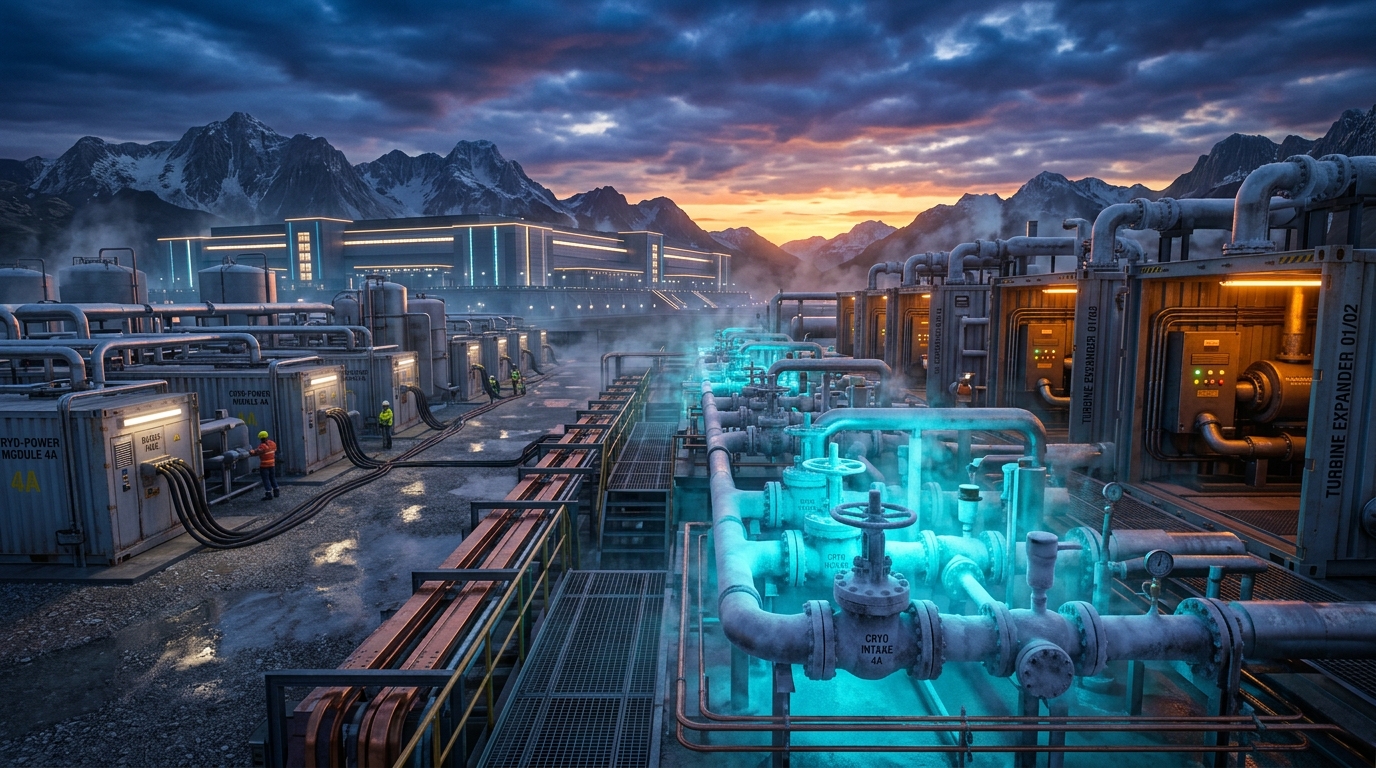
A breakthrough power architecture for the grid-constrained future.
NexGen is engineering cryogenic energy recovery into a modular near-load power platform—designed to extract more useful power from LNG energy streams and deploy where conventional grid infrastructure cannot keep pace with demand.
One architecture. Four paths to action.
Engineered to align technical proof with strategic mission, whether deploying capital, solving site power deficits, or driving public innovation.
Government & Public-Sector Programs
Advance domestic industrial capability, resilient infrastructure, field demonstration, advanced-energy innovation, and regional economic development through a milestone-led deployment platform.
Strategic and Financial Capital
Evaluate a differentiated industrial platform positioned at the intersection of power scarcity, distributed generation, LNG infrastructure, and high-value application demand.
Pilot and Deployment Partners
Turn a real power constraint into a structured demonstration with defined technical, economic, operational, reliability, and scale-up objectives.
Media and Industry Leaders
Explore the engineering, market forces, people, and field-validation strategy behind a potentially new category of distributed power.
Power demand is moving faster than power infrastructure.
AI compute, industrial reshoring, critical infrastructure, remote operations, defense readiness, microgrids, and transportation modernization are increasing demand for dependable electricity in places where new grid capacity may be delayed, expensive, or unavailable.
Interconnection Delay
Critical loads cannot wait 5 to 7 years for utility transmission expansion and substation upgrades. Expansion projects stall while capital sits idle.
Stranded Cold Energy
Conventional LNG regasification treats extreme cold (-162°C) as an unwanted waste stream to burn away, discarding terajoules of high-grade exergy.
Industrial-Scale Sprawl
High-efficiency generation is traditionally tied to multi-acre permanent plants, requiring heavy civil construction, multi-year permitting, and fixed real estate.
Mission-Critical Vulnerability
Extreme weather and grid volatility threaten high-value operations. Facilities require independent, dispatchable generation directly behind-the-meter.
Demand Accelerates
High-value projects need capacity on operating timelines, not infrastructure timelines. Compute clusters and industrial loads cannot endure multi-year stalls.
The Grid Becomes the Constraint
Interconnection queues, transmission limits, remote locations, and resilience requirements delay growth across domestic industrial corridors.
Near-Load Power Becomes Strategic
Modular generation shifts from contingency planning to an enabler of deployment, continuity, and expansion right at the boundary of consumption.
Efficiency Still Matters
Solving deployment without improving the energy architecture preserves the old tradeoff between mobility and performance. NexGen eliminates that tradeoff.
“The next generation of power will be judged by two questions: How efficiently can it convert the available energy—and how quickly can it reach the load?”
Conventional power burns fuel.
NexGen captures its massive cryogenic energy first.
LNG arrives at cryogenic temperature (-162°C / 111 K). Conventional systems primarily monetize its chemical energy and manage—or discard—the cold created by the supply chain. NexGen engineers the system so cryogenic potential becomes a productive input.
The cryogenic state is treated largely as an operating burden or waste liability. Seawater vaporizers or ambient air dump hundreds of kilojoules per kg of physical work potential into the environment without generating a single watt.
Cold-energy recovery, turbomachinery, permanent-magnet generation, controls, packaging, and the deployment model are engineered together. The -162°C sink expands thermodynamic delta-T to extract substantial shaft work before combustion.
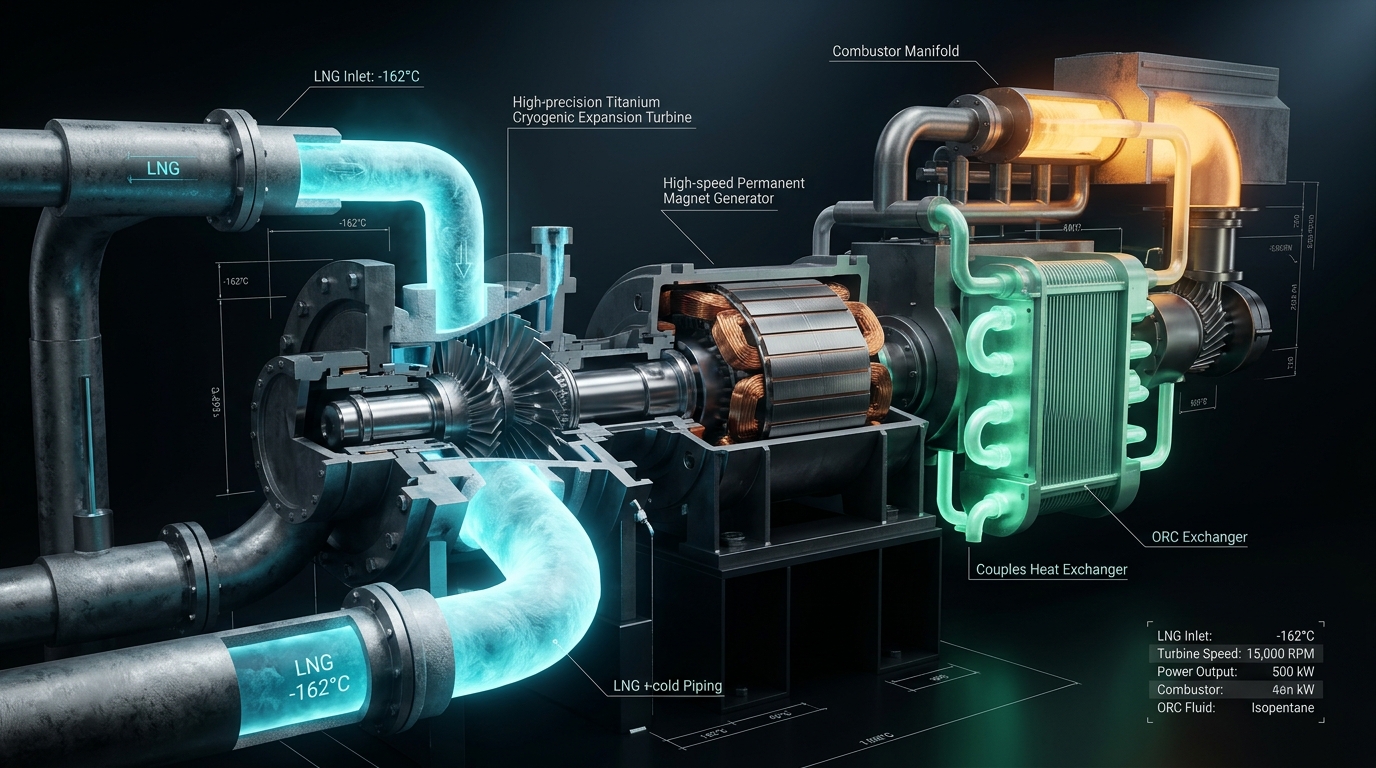
“What the power industry often treats as a condition to manage, NexGen is engineering as an asset to recover.”
Engineering cold-energy recovery into a deployable power platform.
NexGen is not positioning cryogenic recovery as a specialized appendage to a massive LNG terminal. It is designing an integrated, modular generation system around how fuel is received, converted, recovered, controlled, packaged, and deployed.
Dense, Transportable Fuel at -162°C
Liquefied Natural Gas arrives as an energy-dense, easily transportable fuel stream at cryogenic temperatures. Rather than depressurizing and warming the fuel with ambient sea or air, NexGen maintains fluid integrity to preserve its negative thermal exergy.
Hermetically sealed flow manifolds ensure bubble-free delivery into the high-pressure cryogenic expansion stage with zero boil-off gas venting.
Turbine-PMG Rotary Architecture
A compact turbine prime mover directly coupled with a high-speed permanent-magnet generator (PMG) converts fuel energy into clean electrical output. Eliminates mechanical gearboxes, reduces frictional losses, and maximizes rotating power density.
Neodymium-iron-boron magnetic array encased in carbon fiber sleeve to resist centrifugal forces at hyper-rotational velocity.
Integrated Cryogenic Recovery Cycle
The recovery cycle is purpose-engineered to use the ultra-cold LNG stream as a continuous thermodynamic cold sink. By capturing heat from the primary exhaust and condensing a secondary organic fluid at sub-zero temperatures, the platform expands Carnot efficiency.
Diffusion-bonded microchannel heat exchangers enable extreme thermal flux between cryogenic LNG and the Rankine cycle loop in a compact footprint.
Sub-Millisecond Dynamic SCADA
Integrated control algorithms govern thermal flows, load stepping, turbine rotational speed, and protective safeties. Seamlessly adapts to transient step-loads from AI data centers, microgrid islanding, or variable industrial cycles.
Predictive feedforward control coordinates valve throttles and inverter switching to prevent cryogenic flashing and pressure surges during rapid load changes.
Transportable ISO Enclosure
Factory-tested packaging engineered for standard highway, rail, and maritime transport. Enables deployment directly at the facility boundary in weeks—bypassing multi-year high-voltage substation and transmission construction timelines.
Integrated vacuum-jacketed cryogenic fuel flanging, medium-voltage 13.8 kV step-up transformer, and fiber-optic SCADA bus for immediate site commissioning.
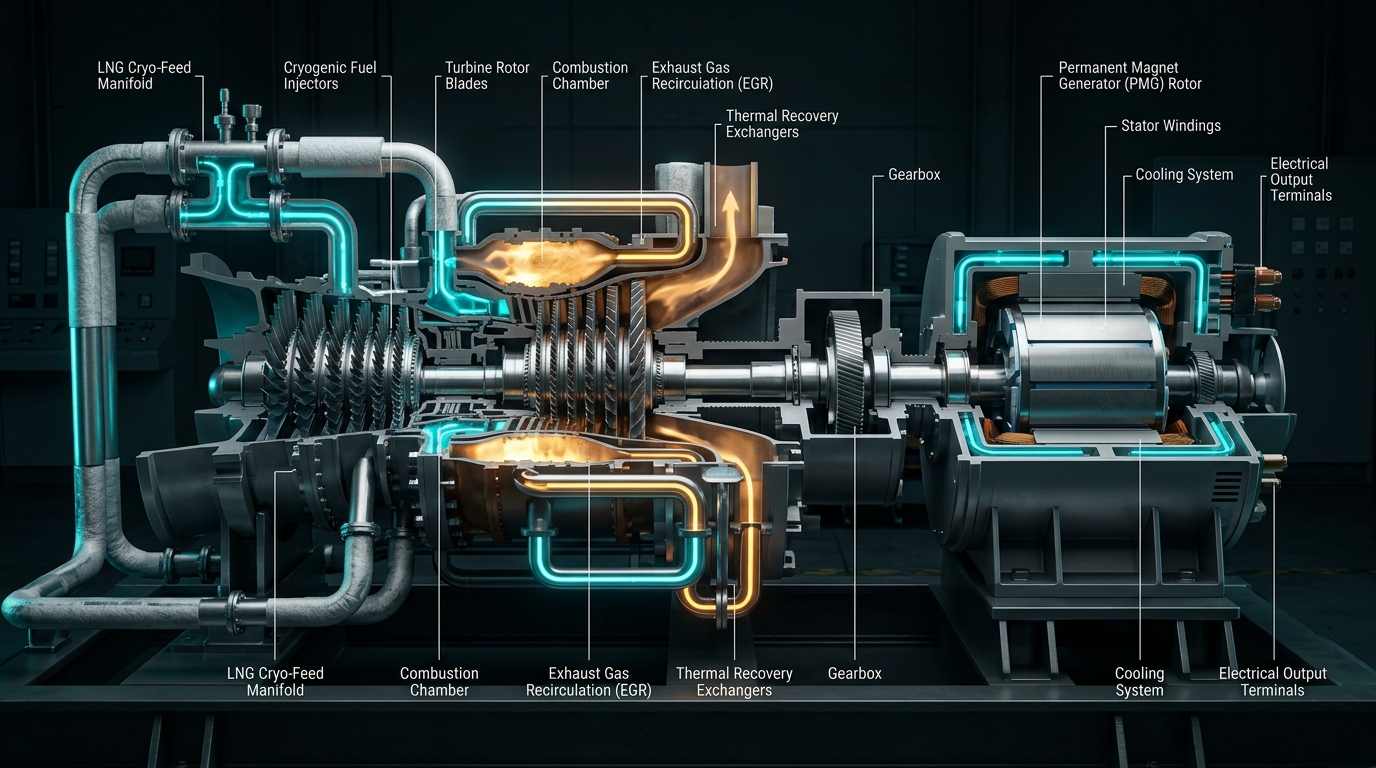
“The breakthrough is not a single component. It is the specific combination.”
Twelve disciplines. One deployable architecture.
Most clean-tech innovations fail because they optimize one subsystem while leaving the rest constrained. NexGen integrates all twelve disciplines into a unified, commercialized industrial product.
System Integration
Designing the fuel, thermal, rotating, electrical, controls, and deployment layers as one cohesive operating system rather than an assembly of disparate vendor parts.
Power Density
Pursuing meaningful multi-megawatt electrical output within a compact containerized platform suitable for tight industrial footprints and near-load access.
Transportable Packaging
Engineering around road weight limits, crane pick-points, structural rigidity, standard shipping dimensions, and rapid site tie-ins—not just laboratory bench setups.
Turbine-PMG Architecture
Directly coupling a turbine prime mover with high-speed permanent-magnet generation, eliminating the weight, maintenance, and parasitic losses of mechanical gearboxes.
Recovery-Cycle Design
Using the cryogenic cold sink to create additional thermodynamic value through an integrated closed-loop secondary cycle, converting lost cold into electrical work.
Integrated Controls
Coordinating energy flows, rapid load response, operating states, cryogen phase stability, automated safety protection, and grid synchronization in sub-milliseconds.
Deployment Model
Bringing high-efficiency generation directly to power-constrained loads rather than waiting years for centralized utility transmission expansion.
Application Fit
Configuring the platform around real operating environments, duty cycles, reliability needs, fuel logistics, and commercial constraints across compute, rail, and mining.
Intellectual Property
Building the architecture around proprietary engineering, foundational patent claims, and deep trade secrets developed over two decades of cryogenic rotating equipment innovation.
Demonstrated Economics
Using rigorous thermodynamic modeling, Kingman physical test cells, and strategic pilot deployments to establish the capital and levelized cost advantage required for scale.
Dual-Fuel & Low-Carbon Path
Engineered to operate on cryogenic LNG today while maintaining drop-in compatibility with biomethane (bio-LNG) and hydrogen enrichment blends without redesigning the prime mover.
Hermetic Containment & Safety
Closed-loop boil-off gas capture, double-wall vacuum-insulated cryogenic manifolds, and multi-tier failsafe emergency inerting protocols for continuous behind-the-meter operation.
A defined MW-class starting point for a much larger platform story.
The initial LNG-to-power configuration gives investors, government programs, and pilot partners something concrete to evaluate: a defined reference system, priority operating environments, and a clear path to repeatable deployment.
NexGen Modular Skid Architecture (5 MW Reference Platform)
MW-Class Electrical Output
A defined modular electrical-output configuration designed for multi-megawatt scalability through standardized parallel clustering.
Integrated Energy Recovery
A closed thermodynamic loop designed to capture value from both fuel conversion and cryogenic phase transitions simultaneously.
Transportable Architecture
Packaging designed around highway shipping envelopes, minimal foundation prep, and simple skid-mounted interconnects.
Near-Load Siting
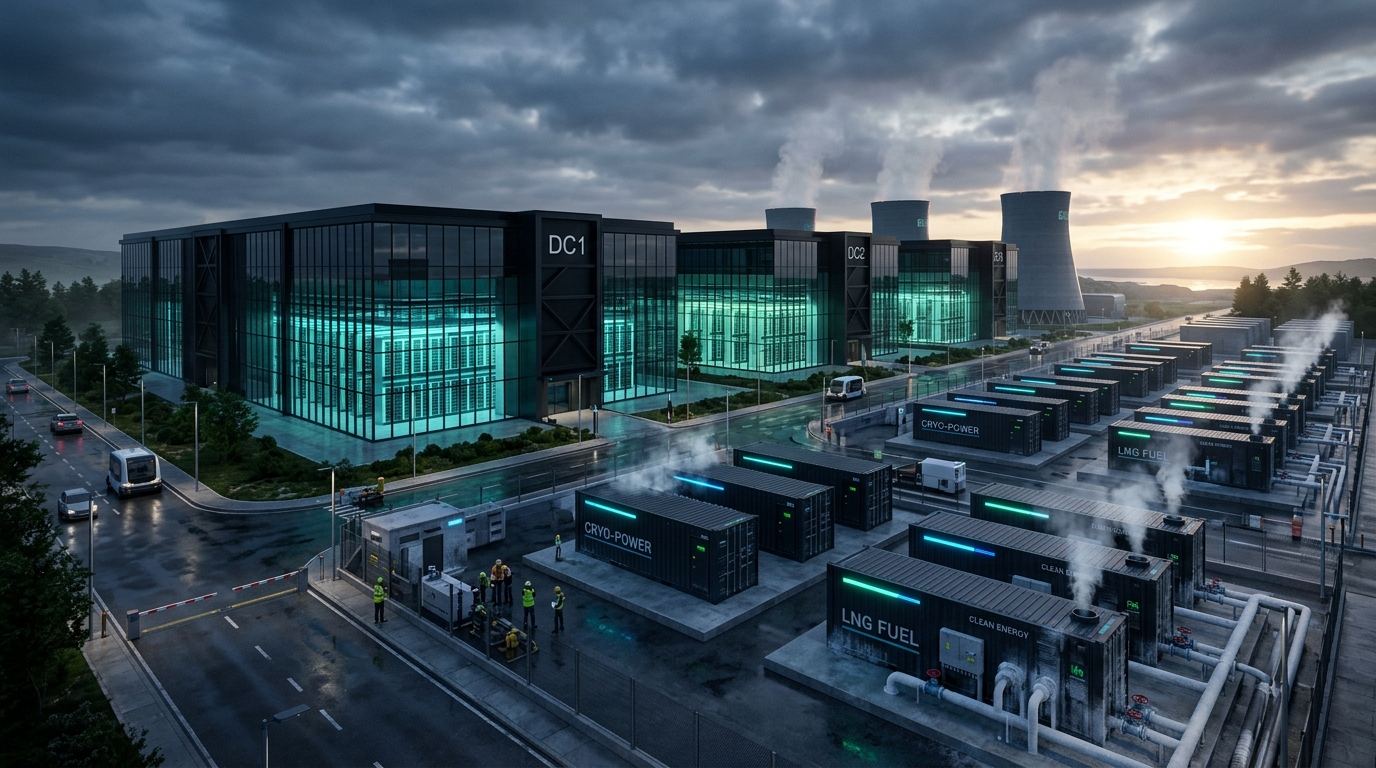
Engineered for immediate boundary installation at AI data centers, industrial manufacturing, defense installations, and remote campuses.
Built for markets where power constraints become growth constraints.
Wherever infrastructure lag threatens revenue, operational readiness, or strategic expansion, NexGen delivers dispatchable, high-efficiency power directly to the load.
AI and Data-Center Infrastructure
Help address the widening gap between compute demand and utility interconnection queues with modular, near-load generation designed around high-value, high-availability hyperscale operations.
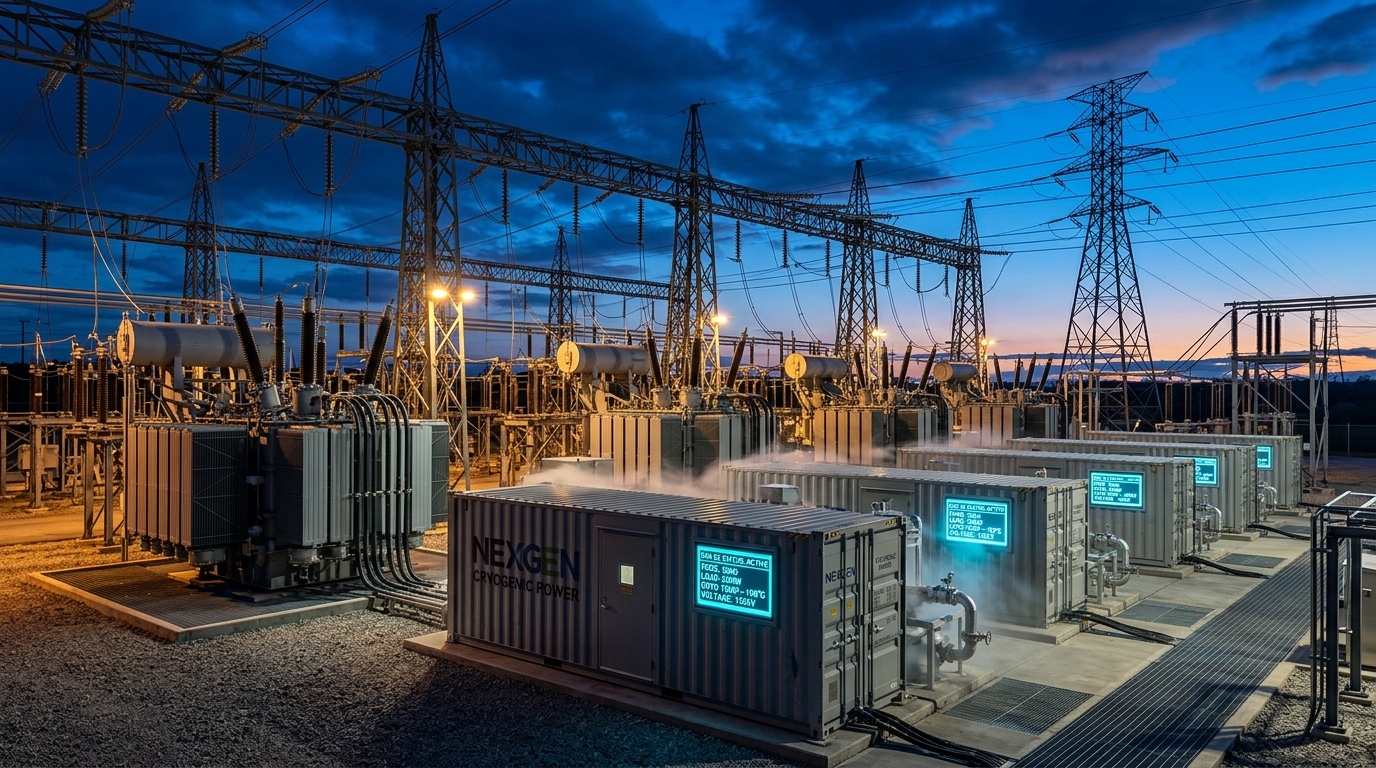
Industrial and Critical Infrastructure
Support manufacturing plants, chemical processing facilities, and regional substations where electrical continuity, local operating control, deployment timing, and resilient capacity are non-negotiable strategic requirements.
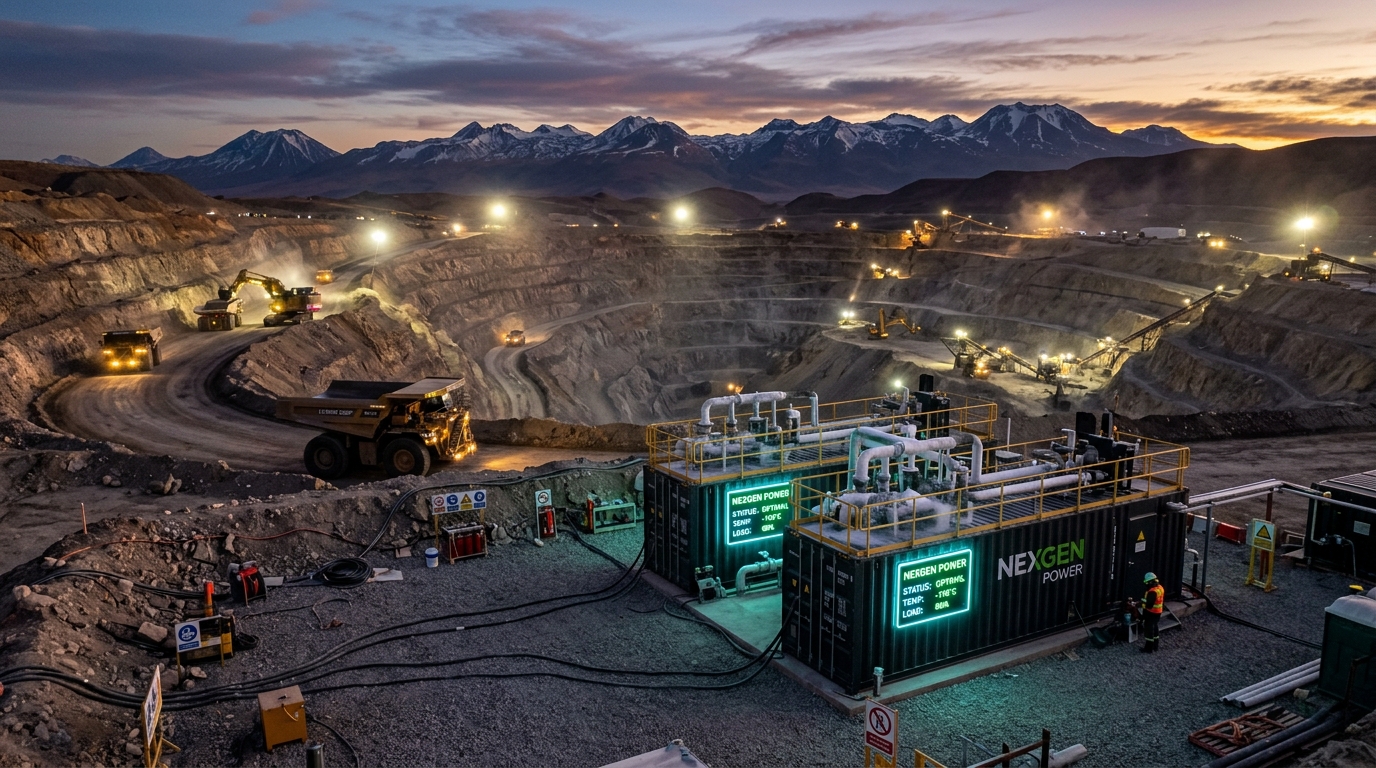
Remote Operations & Mining Corridors
Bring high-density generation closer to mines, mineral processing, energy extraction, and heavy construction corridors where grid connection is geographically impossible or economically prohibitive.
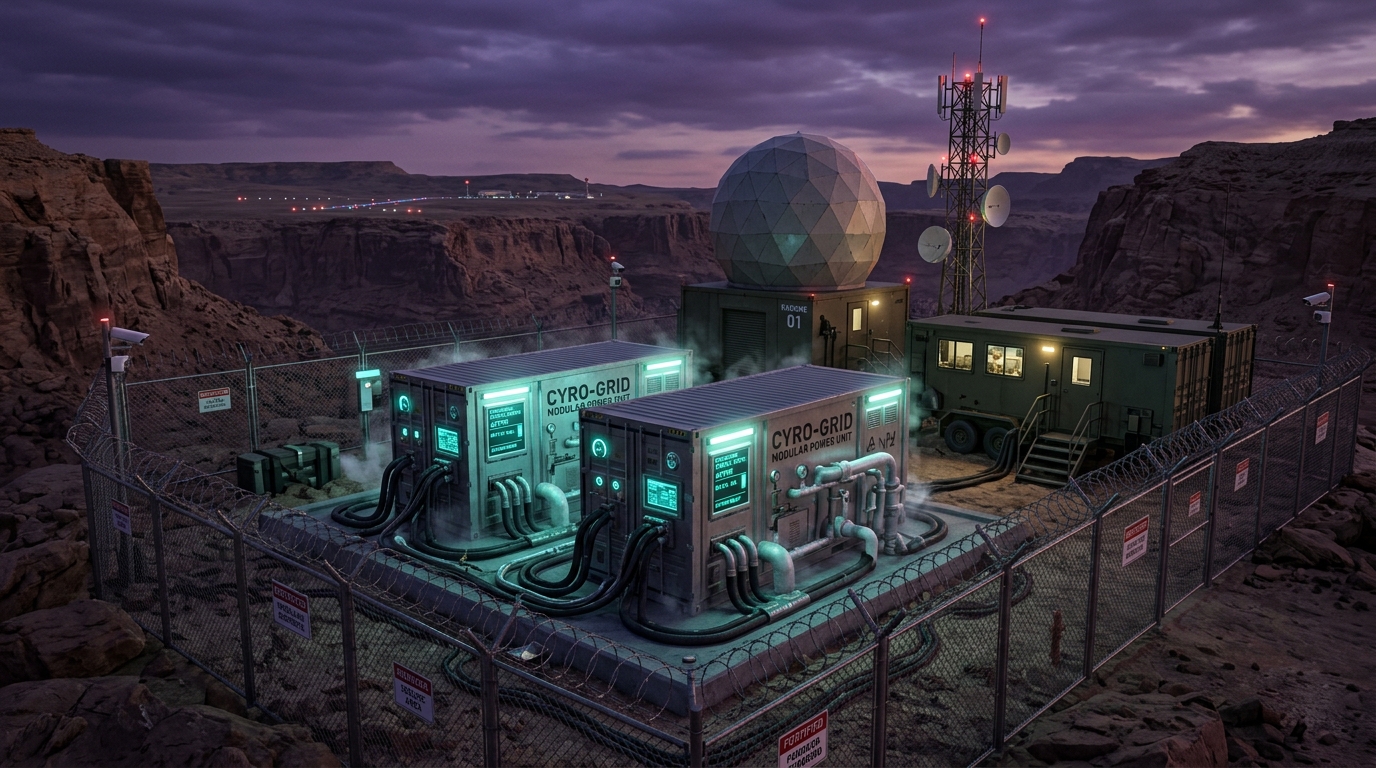
Microgrids and Defense Readiness
Add ultra-reliable dispatchable capacity to local energy systems seeking military-grade resilience, black-start capabilities, and a credible path to isolate critical defense assets from vulnerable civilian grids.
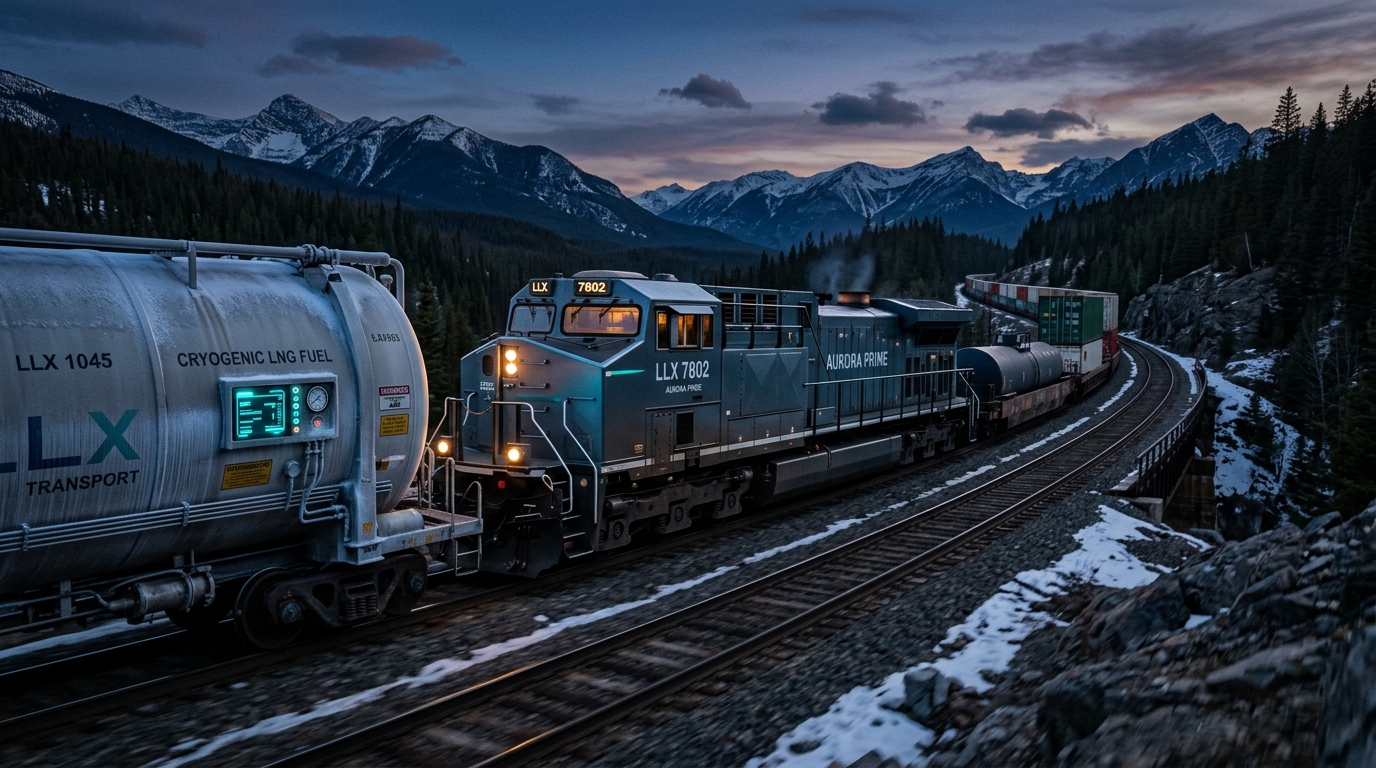
Rail and Mobile Power Platforms
Extend the platform thesis into LNG-fueled turbine-electric architectures for Class 1 heavy haul locomotives, maritime vessels, and mobile military disaster response tenders.
Is your site a fit for a NexGen pilot?
NexGen is seeking qualified host sites and strategic collaborators with a material power constraint, an appropriate operating environment, executive sponsorship, and a credible path from validation to commercial scale.
Host-Site Feasibility & Thermodynamic Yield Screener
Structured Pathway: From Host Site to Scaled Commercial Deployment
Confirm use case, load profile, fuel access, site urgency, executive sponsor, and scale potential.
Establish configuration, thermal interfaces, KPI success criteria, and formal evidence protocol.
Adapt container skids, heat exchangers, and SCADA firmware to host facility boundaries.
Execute controlled continuous power generation against contracted availability targets.
Synthesize empirical operating data into bankable third-party engineering validation reports.
Transition validated site into permanent commercial multi-unit multi-megawatt operational fleet.
LNG is powering the grid-constrained era.
The winning platform extracts double the energy from every fuel stream.
- 01 Power demand is rapidly outrunning traditional grid transmission and substation infrastructure.
- 02 Near-load generation is becoming strategically necessary, not merely contingency planning.
- 03 Existing modular systems solve deployment speed but inherit legacy single-cycle thermodynamic limitations (32%–38% efficiency).
- 04 LNG arrives carrying two distinct energy assets: dense chemical energy and concentrated cryogenic potential (-162°C).
- 05 Conventional generation systems burn the fuel and discard the cold into seawater or ambient atmosphere.
- 06 NexGen is designing the entire rotary and thermal architecture to harvest both assets in an integrated cycle.
- 07 The result combines modular ISO deployment speed with efficiency normally reserved for multi-hundred-MW utility combined-cycle plants.
- 08 The Kingman, Arizona campus and strategic commercial pilots provide the physical empirical proof.
“If LNG will be used to serve constrained power markets, the winning architecture should extract more useful power from every fuel stream.”
Strategic Implication: NexGen does not need to claim that every incumbent becomes obsolete. The stronger position is that a new market condition—large, urgent, location-specific power demand—creates room for a purpose-built architecture that integrates deployability and energy recovery from the beginning.
The Arizona campus designed to turn cryogenic engineering into field proof.
Cryogenic power systems cannot be validated solely in simulations. The Kingman facility provides the physical infrastructure to assemble, instrument, and verify full-scale closed-loop hardware under real operating pressures and sub-zero thermal extremes.
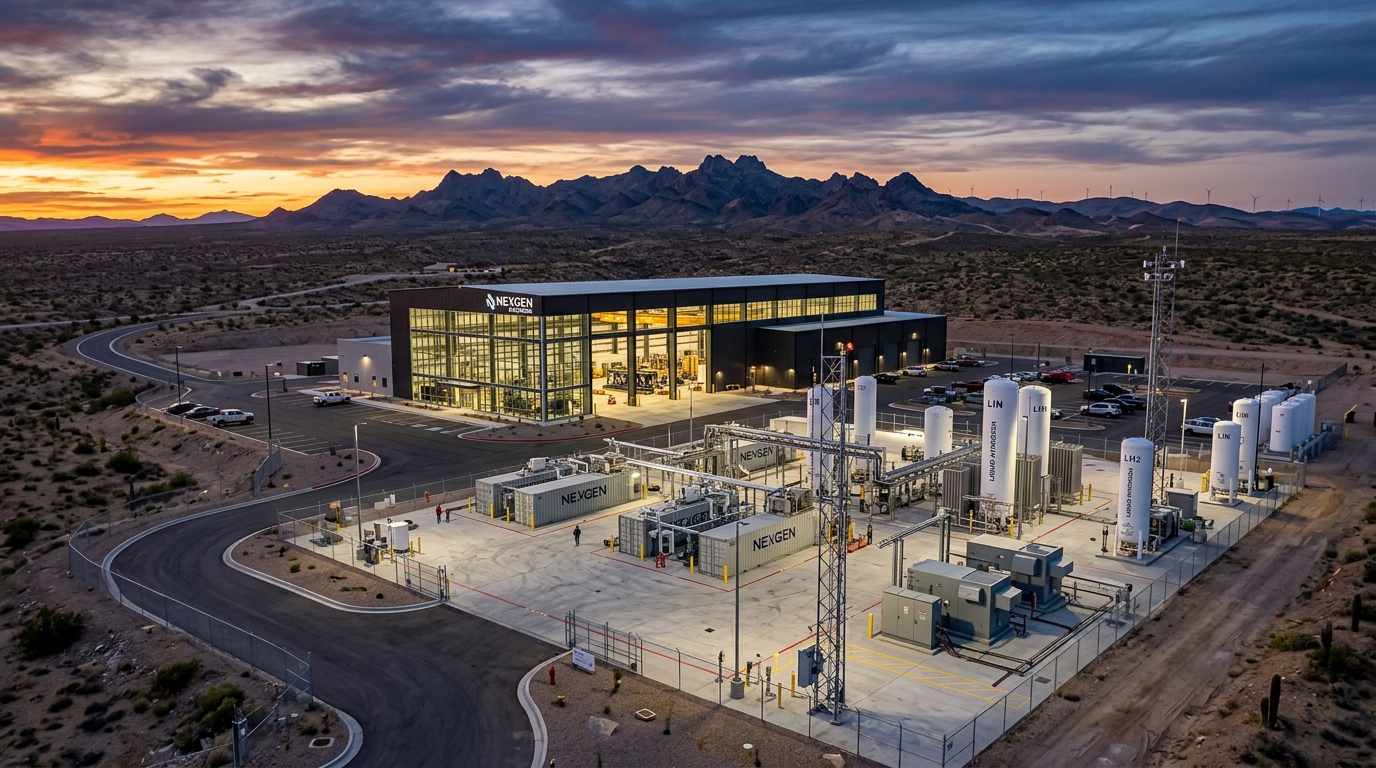
Multi-phase development timeline transitioning prototype component dyno runs into full containerized 5 MW skid commissioning.
Verified photographic documentation of vacuum-jacketed piping manifolds, cryogenic tanks, and electrical interconnect bays.
Mass flow capabilities from 5 kg/s to 45 kg/s LNG and dynamometer speed ratings up to 30,000 RPM.
Quarterly audit checkpoints tracking turbomachinery balance, seal integrity, and generator thermal dissipation.
High-level process flow diagrams illustrating cryogenic thermodynamic recuperation and electrical step-up interfaces.
High-tech engineering and manufacturing job creation in Mohave County, supporting American advanced manufacturing leadership.
Controlled Engineering & Empirical Test Repository
Public evidence makes progress visible; controlled access protects proprietary IP that creates institutional value. Qualified partners may request verified data room access under bilateral NDA.
Engineering P&IDs & 3D Packaging
Complete piping & instrumentation diagrams, fluid mass/energy thermodynamic balances, 3D containerized packaging CAD envelopes, and supplier BOM envelopes.
Validation Test Matrix & Logs
Instrumented dyno test protocols, transient step-load rejection data, thermodynamic cold exergy capture sensor logs, and emissions model verification.
Capital Pro-Forma & Patent Schedules
Confidential IP portfolio disclosures, LCOE unit economics, commercialization tranches, and Flowserve transaction historical covenants.
A new power architecture built on demonstrated cryogenic engineering capability.
Most clean-tech energy startups begin with speculative slides. NexGen begins with institutional lineage and validated intellectual property acquired by a Fortune 500 industrial leader.
In July 2024, Flowserve Corporation (NYSE: FLS) acquired NexGen Cryogenic Solutions’ submerged LNG pump technology, systems, packaging, and in-process research and development. That transaction provides an indisputable third-party marker of the engineering team's ability to originate technically meaningful, commercially viable cryogenic intellectual property.
| Acquiring Entity | Flowserve Corp (NYSE: FLS) |
| IP Transferred | CryoDrive Submerged LNG Pumps & Rotary Patents |
| Current Platform | Modular Cryogenic Power & Rail Architecture |
| Founder Engineering Heritage | 20+ Years Cryogenic Turbomachinery & Patents |
External Tech Sale
Direct commercial transaction validating cryogenic rotating machinery originality and performance.
Specialist Lineage
Decades of hands-on cryogenic fluid mechanics, turbomachinery design, and high-pressure LNG systems.
Physical Campus
Dedicated testing campus in Kingman, AZ to produce hard empirical data rather than theoretical white papers.
Patent Strategy
Proprietary multi-stage expansion architectures and integrated thermodynamic recuperation claims.
Targeted Pilots
Application-focused demonstrations solving immediate multi-megawatt commercial bottlenecks.
Fund the milestones that turn architecture into infrastructure.
NexGen is pursuing a disciplined blended capital architecture across non-dilutive government grants, aligned equity capital, strategic industrial corporations, and pilot collaborators.
Government Programs
Advance resilient microgrid infrastructure, domestic clean manufacturing, defense energy security, and workforce innovation across DOE, DOD, and state grant programs.
Equity Capital
Participate in an industrial technology platform addressing power scarcity, distributed generation, LNG infrastructure, and multi-gigawatt compute load expansion.
Request Investment Brief →Strategic Corporate Partners
Co-develop component supply chains, packaging fabrication, EPC integration, fuel distribution channels, and global application access.
Pilot Collaborators
Convert a real site power deficit into an empirical demonstration milestone with structured technical, operational, and commercial validation.
Propose a PilotCapital Releases Linked to Audited Engineering Milestones
Engineering Integration
Closed-loop CFD/FEA cycle validation, thermodynamic optimization, and long-lead component procurement.
Kingman Dyno Cell
Instrumented test cell runs, high-speed rotary PMG spin, sub-zero fluid manifold commissioning.
5 MW Skid Prototype
Full 40-ft ISO containerized integration, load-bank step response verification, combined-cycle tuning.
Host-Site Pilot
Behind-the-meter demonstration with commercial partner, generating continuous audited operating data.
Commercial Fleet
Factory-level manufacturing line, multi-unit project finance syndication, and fleet maintenance contracts.
Qualified parties may request approved technical, corporate, intellectual-property, financial, and program materials. Access is subject to review and appropriate confidentiality protections.
Deep cryogenic expertise, focused on a larger power problem.
Bridging technical physics mastery with commercial infrastructure execution to ensure the architecture scales into an institutional platform.
Dennis W. Chalmers
Dennis has spent more than two decades developing cryogenic rotating equipment for international LNG infrastructure. His track record spans engineering leadership, patented cryogenic pumps and expansion turbines, and the CryoDrive technology successfully acquired by Flowserve in 2024.
Commercial & Scale Leadership
Serves as the vital bridge between patented technical physics and multi-market commercial execution. Directs capital formation, strategic joint ventures, federal program alignment, host-site pilot pipelines, and industrial supply chain partnerships.
The ideas behind the architecture.
Helping government reviewers, investors, infrastructure executives, pilot hosts, and journalists understand the cryogenic thermodynamic opportunity before asking them to believe the company's solution.
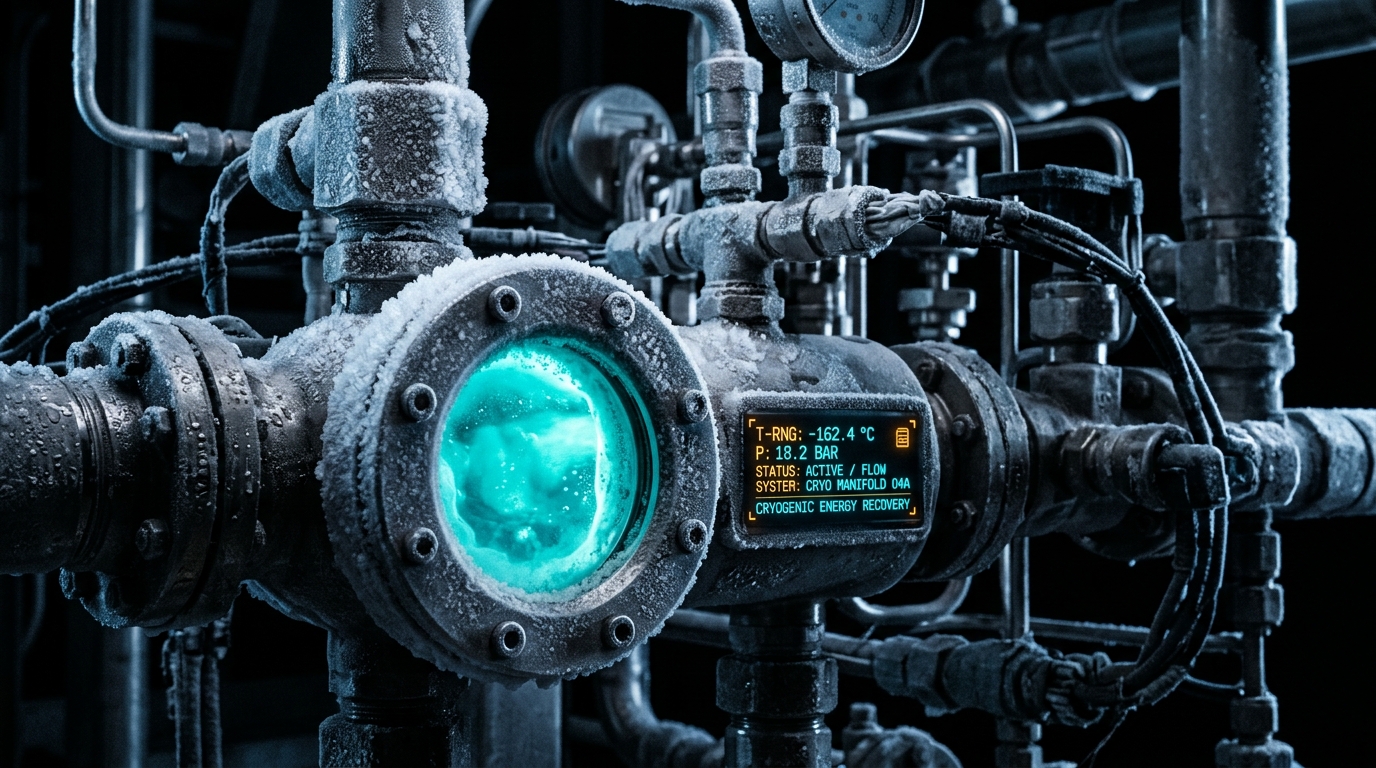
Cold is not just a temperature. It is recoverable energy.
The foundational physical explanation of why LNG’s cold state can and should be treated as a productive thermodynamic asset rather than an unrecovered burden.
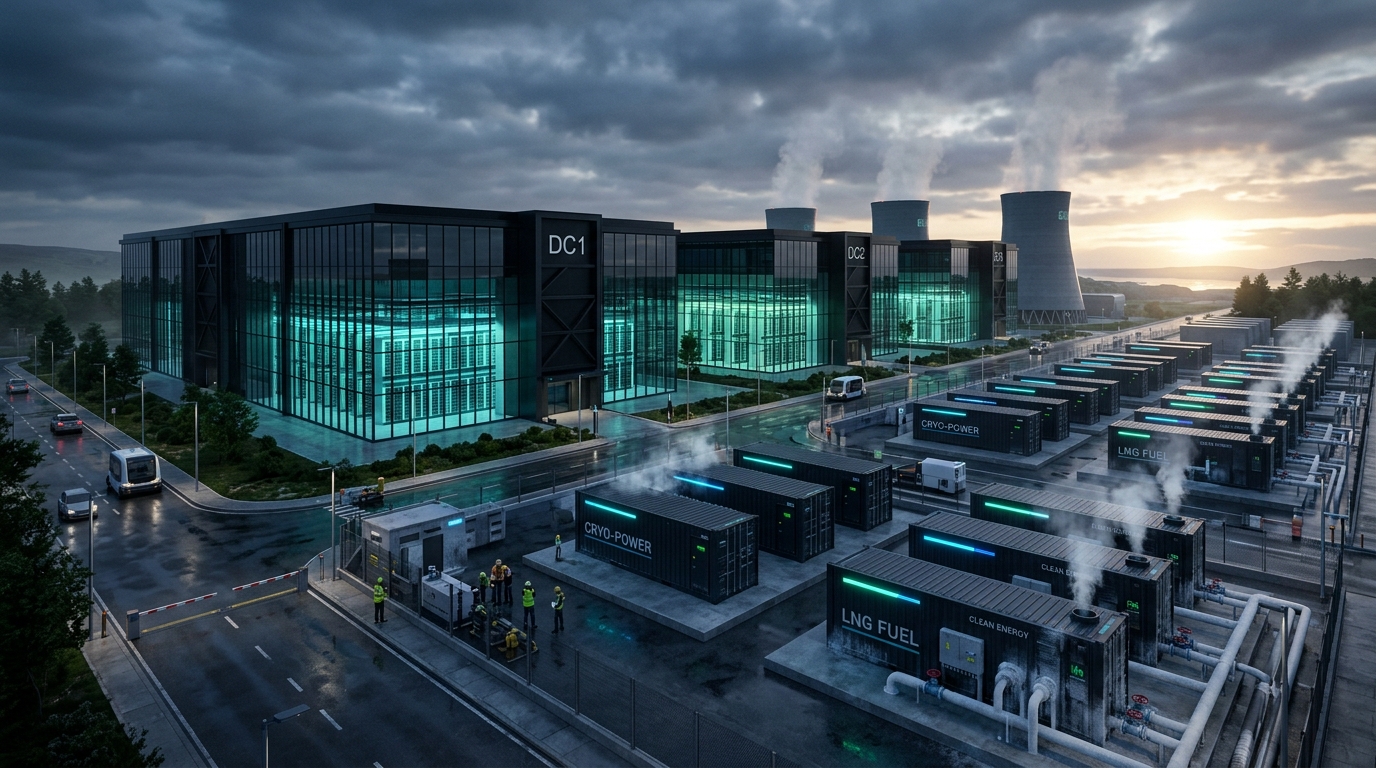
Why the AI power problem requires a new kind of generator
An examination of why time-to-power, near-load deployment, availability, footprint, and efficiency are converging into a new compute infrastructure requirement.
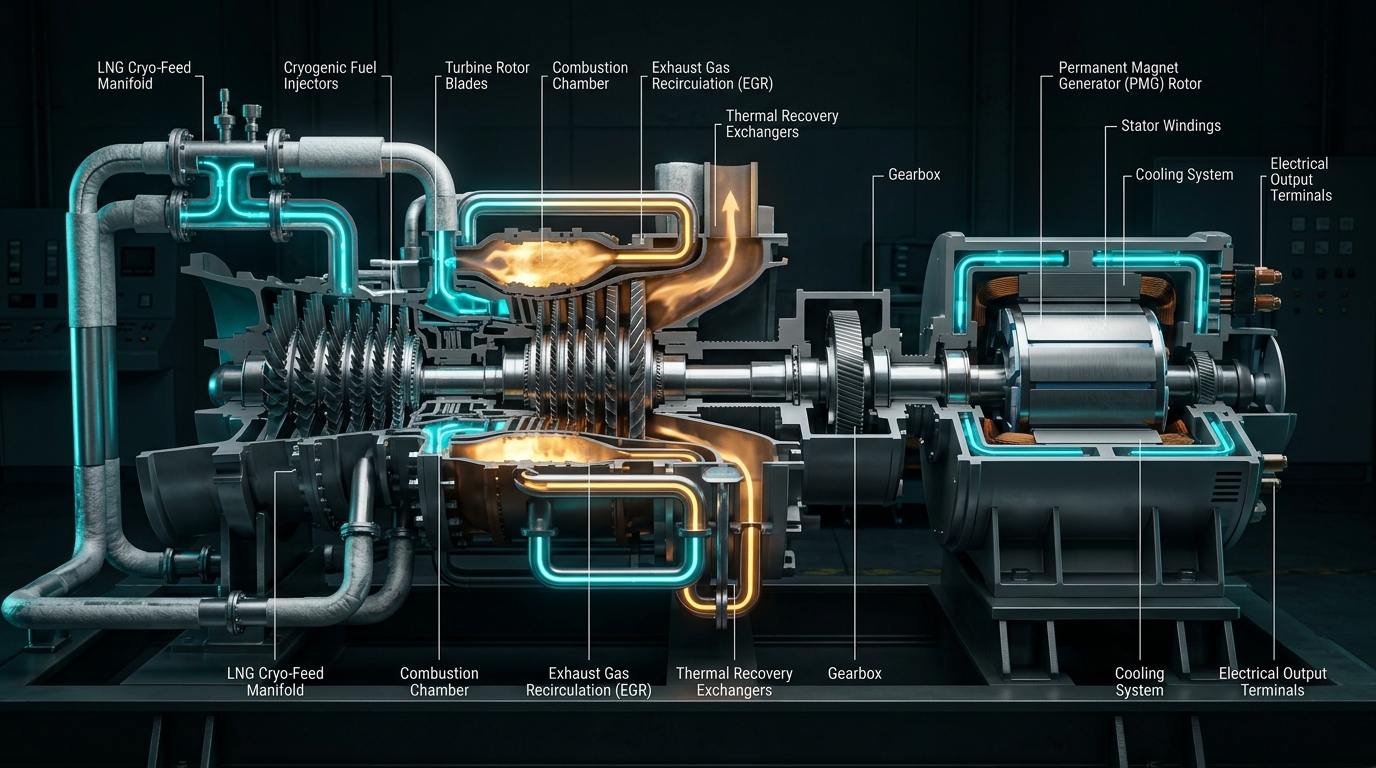
Can modular power match the efficiency of utility-scale plants?
The cycle engineering physics behind NexGen’s recovery-cycle and system integration thesis, targeting 52%–58% net efficiency in an ISO container.
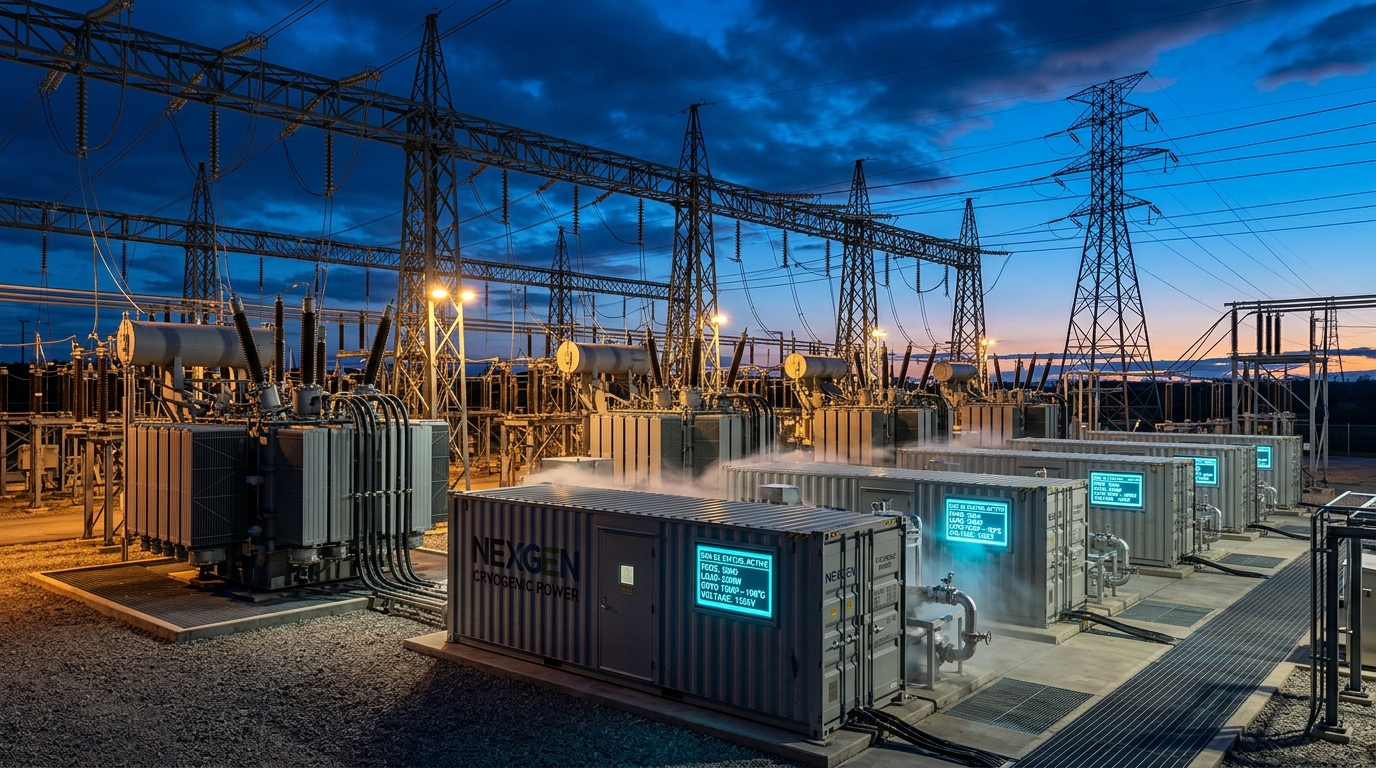
What the power industry throws away—and how NexGen captures it
A visually driven explanation of cold-energy vaporization loss, integrated recovery, and the difference between an add-on and a purpose-built architecture.
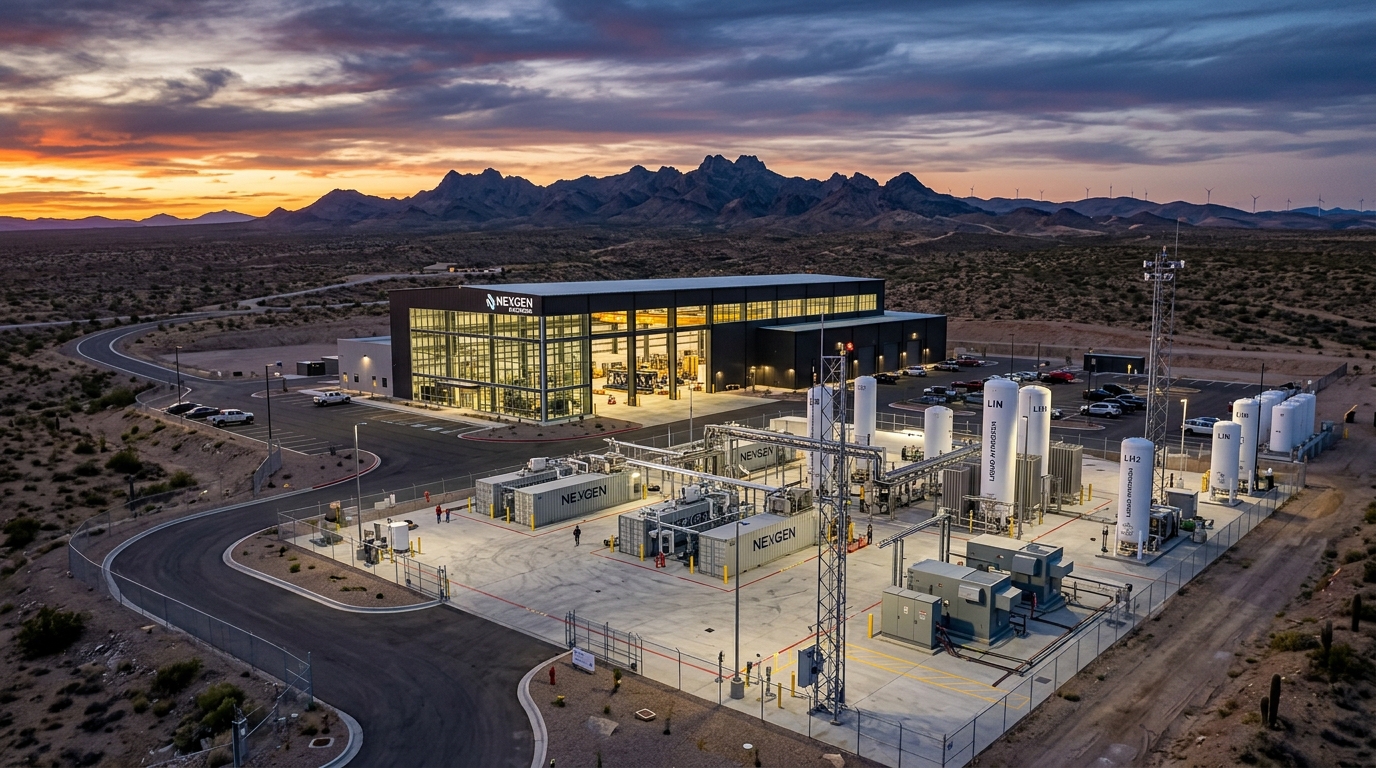
The Arizona campus designed to turn cryo theory into field evidence
The development and public-benefit story behind Kingman’s role in empirical test validation, component dyno runs, and commercialization.
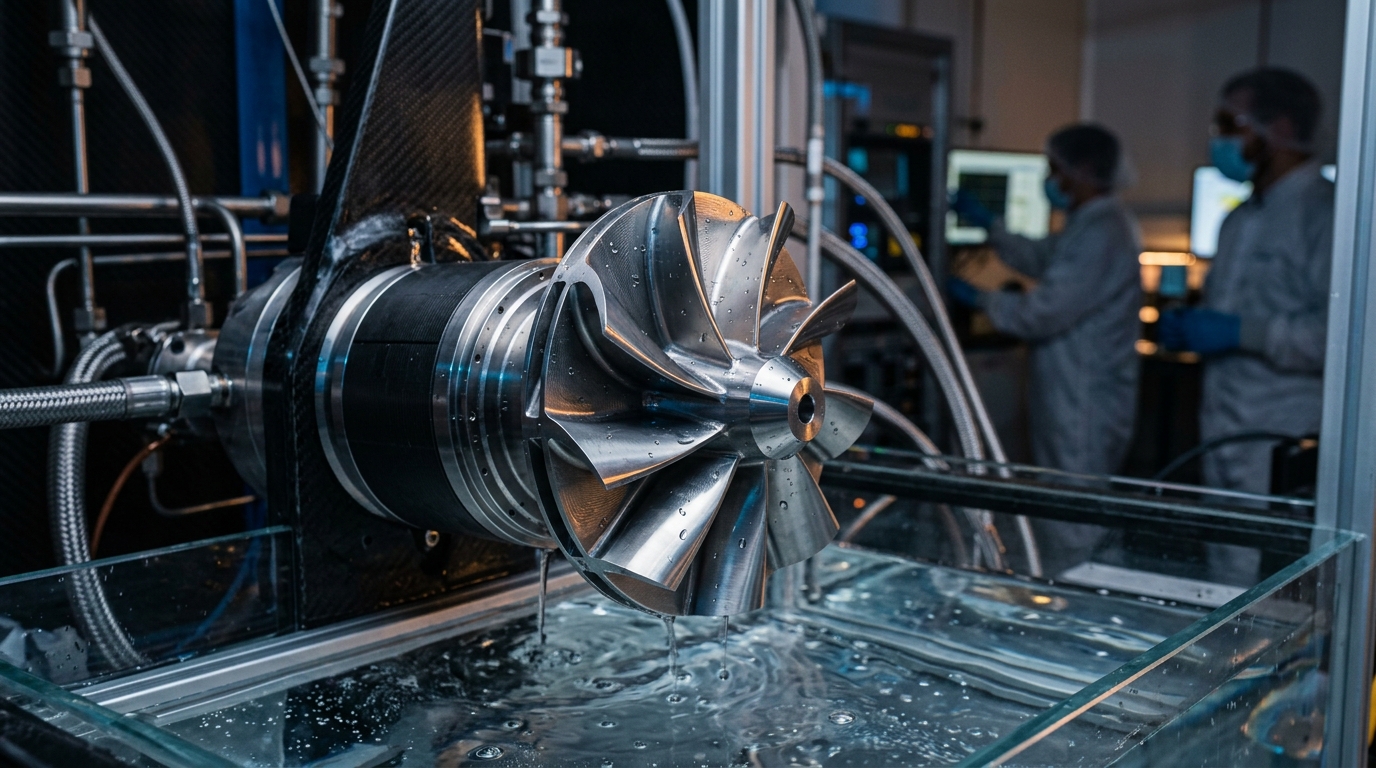
From Flowserve-acquired pump IP to a distributed-power platform
The founder and company evolution narrative connecting specialist cryogenic technical lineage with platform-scale distributed power ambition.
Built to be understood, cited, and verified.
Enabling journalists, analysts, conference organizers, government reviewers, and strategic partners to understand the company quickly—and distinguish approved empirical facts from forward-looking ambition.
Company Fact Sheet
Approved category definition, stage, location, platform summary, initial 5 MW configuration, beachhead applications, and leadership contacts.
Leadership Biographies
Approved short and executive biographies, high-resolution portraits, technical domains, commentary areas, and accredited speaking topics.
Technology CAD Diagrams
Downloadable high-resolution public cutaway diagrams, P&ID schematics, versioning notes, and approved caption guidelines.
Kingman & Prototype Media
Approved photography and B-roll of the Kingman test facility, cryogenic tanks, dyno cells, and prototype assembly skids.
Announcement Archive
Chronological press releases covering Flowserve transaction notices, testing milestones, academic research papers, and event keynotes.
Direct Media Request Path
Rapid-response press inquiry routing for interview requests, deadline-driven commentary, background briefings, and fact-checking.
Every public asset possesses an assigned engineering owner, verification status, date-stamp, versioning tag, and permitted editorial use. The newsroom operates as the canonical public record.
Recover more from the energy stream.
Put power closer to the opportunity.
Engineered for four distinct institutional mandates. Select your focus area below to initiate strategic dialogue.